
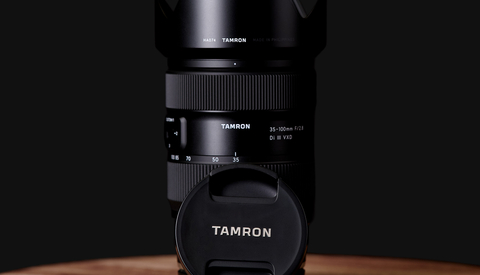
Put Tamron's New 35-100mm f/2.8 to Work in My Headshot Studio: It Won Me Over
Tamron recently sent me their 35-100mm f/2.8 Di III VXD for Nikon Z mount, and I put it to work in my studio.
If you’ve known me for any length of time, you’ll remember how reluctant I’ve been to mount glass from anyone other than my camera’s manufacturer. It was never a knock against other lens makers or the people who build for them. My father taught me that things work best when they’re designed and built under one roof.
As I said in my last review, it’s an old way of thinking. Having already spent time with Tamron’s 35-150mm, I suspected I was in for a treat here too. Tamron didn’t disappoint… again.
As a professional headshot and portrait photographer, I work in the studio more than I don’t. My studio isn’t large. It comes in at a whopping 12 ½ feet wide and 66 feet long. With space at a premium, I need equipment that’s flexible and can adapt to the conditions I’m working in.
Most of my headshot work sits at 92mm, roughly halfway between 85mm and 100mm, and I usually shoot at f/4. Holding that focal length and aperture steady is what keeps my results looking the same from one client to the next, and that matters to me as much as it matters to them.
A 70-200mm f/2.8 has always been my preference, since it gives me both my focal length and my aperture. That is why my Nikon 70-200mm f/2.8 is the lens I use most. It is an F mount lens, so I run it on my Z7 II and Z8 with an FTZ adapter.
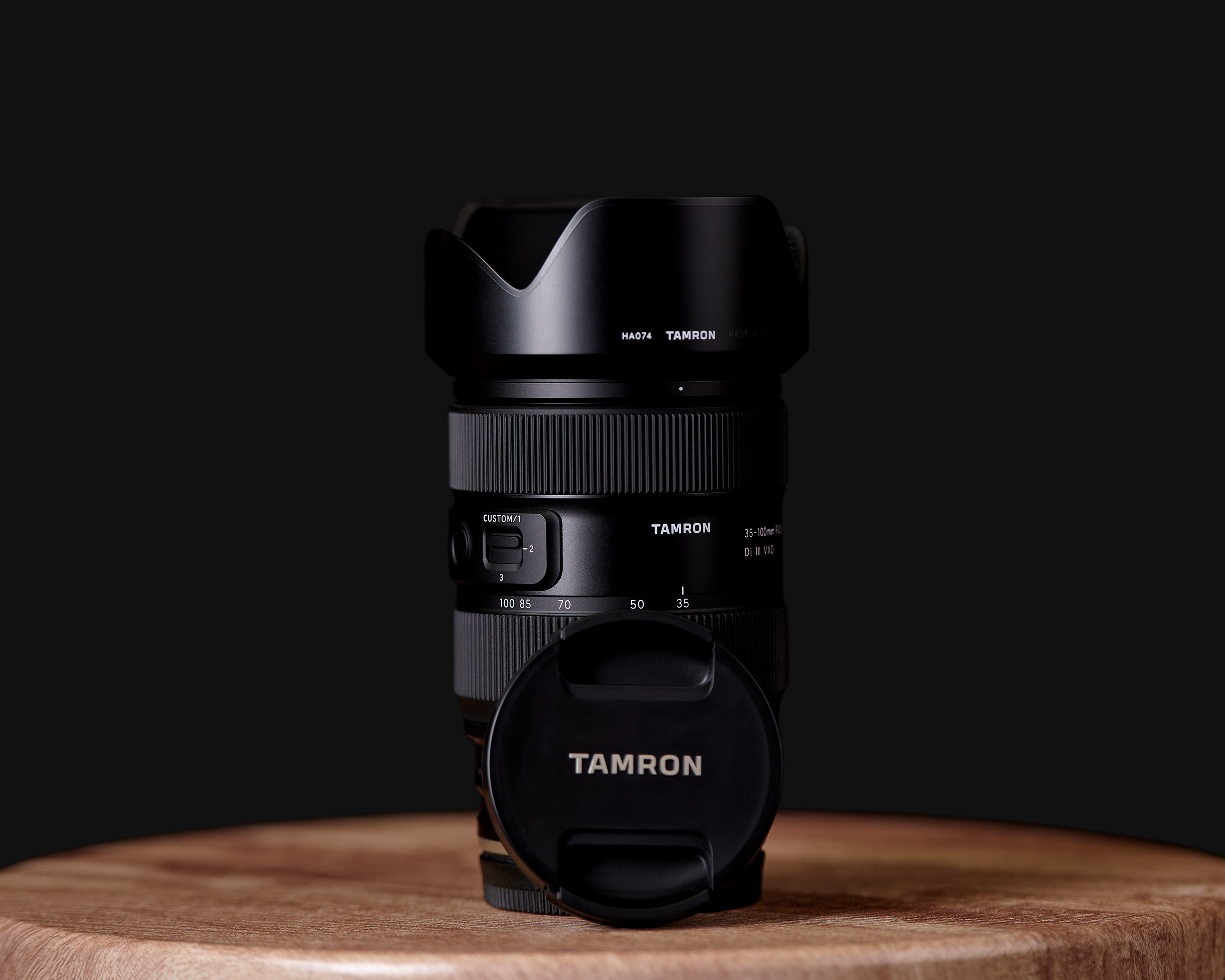
The Tamron 35-100mm is a lightweight full-frame lens, and its focal range is flexible enough to handle both wide-angle shots and tighter compositions.
Size and Weight
I found the lens to be much lighter than most lenses I own. The Tamron 35-100mm comes in at 565 grams (19.9 oz) for the Sony E mount and 575 grams (20.3 oz) for the Nikon Z mount. Comparatively, my Nikon F mount lenses are quite a bit heavier, with the 70-200mm f/2.8 weighing 1,540 grams (54.32 oz or 3.4 lbs) and the 24-70mm f/2.8 weighing 1,070 grams (37.74 oz or 2.36 lbs).
You will notice how light the Tamron 35-100 is, especially if you are used to lugging equipment around or working with multiple cameras and lenses.
The lens is more compact than you might expect. Coming in at 4.7” for Sony and 4.8” for Nikon, this is a smaller lens with a big impact.
The maximum diameter is 80.6mm, with a 67mm filter size, both of which underline its compact stature. The slim design takes up less physical space, but also makes the barrel of the lens easier to hold. Sharing filters with other Tamron lenses is not only doable, but it also saves a few extra dollars. If your filters are 77mm or 82mm, you will likely need adapters to use them.
This is a comfortable lens for both studio work and travel. Whatever your main use, you would struggle to find another lens in its class that is this flexible and performs this well.
I normally lean towards using a tripod, but this lens is light enough that you may not need one. Unless your camera body is excessively heavy, it adds little strain to your arms or shoulders, which makes moving around a lot easier.
Because the Tamron 35-100mm has such a small footprint, you don’t need a collar or foot to mount it to a tripod. It doesn’t pull on the lens mount, and the whole rig feels balanced and comfortable.
If you prefer working with a tripod, secure the camera body to it with a mounting plate, not the lens.

Build
Right out of the box, this lens felt like a professional tool, and the construction backed it up.
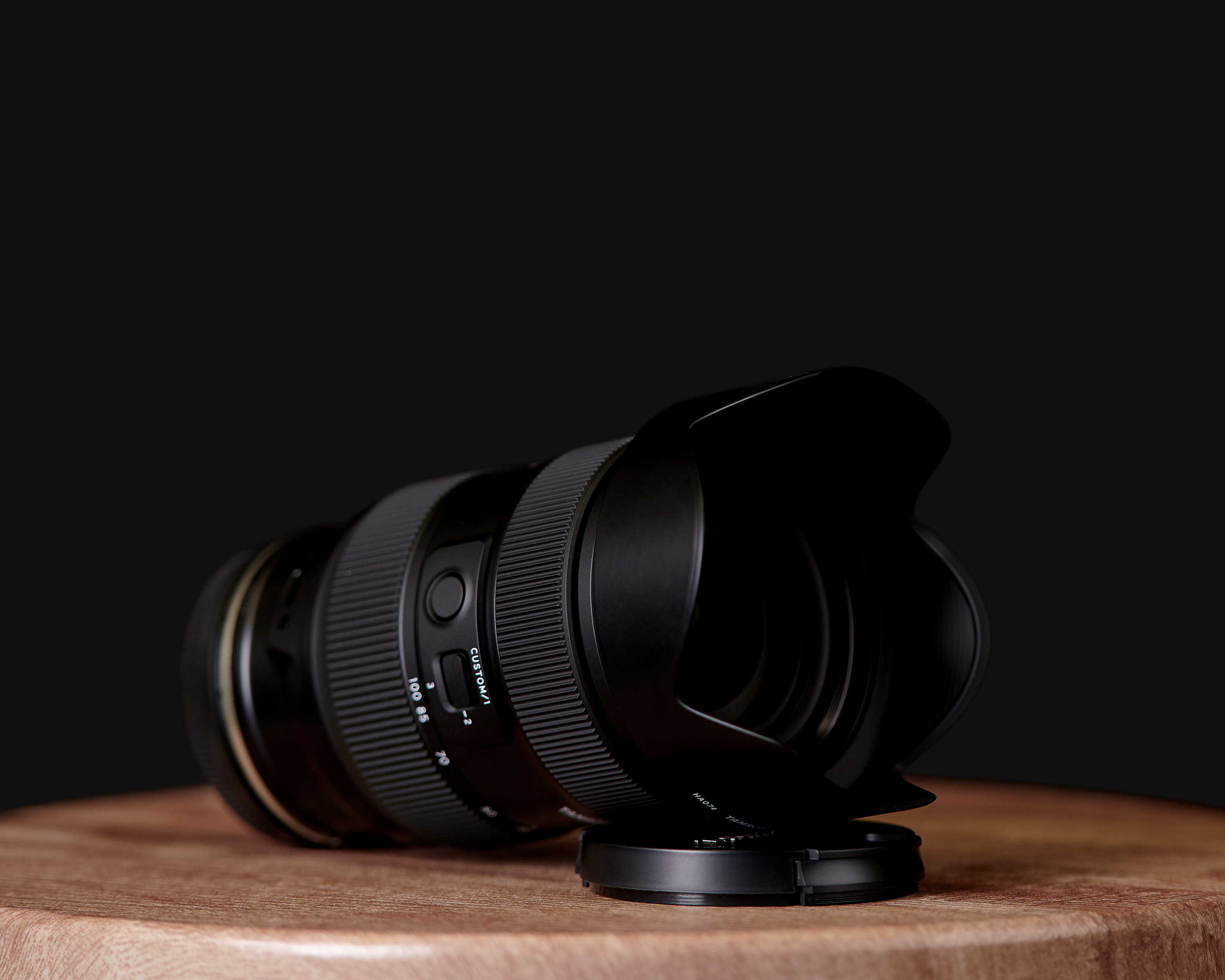
The Tamron 35-100mm f/2.8 has a moisture-resistant build, with leak-resistant seals that protect the lens from dust and rain, which makes it well-suited to outdoor and environmental photography. The front element is treated with a fluorine coating to repel water and oil, making it easy to wipe away fingerprints and smudges. On the outside, the body of the lens uses an abrasion-resistant finish to prevent scratches.
Tamron also included a customizable focus set button alongside an internally waterproofed USB-C port for firmware updates and settings adjustments.
It is clear that Tamron has put real thought into keeping these lenses current. There is no word yet on what they have planned next, but firmware updates through the USB-C port have become a hallmark of their newer builds. On mirrorless systems, that kind of update can be a real advantage.
The lens works with the Tamron Lens Utility software, which lets you assign functions and customize the buttons. With the mobile app, you can adjust those settings mid-shoot, right from your phone. You can also set an electronically controlled stopper on the manual focus ring via the app, ensuring you don’t accidentally ruin your framing if you happen to bump the lens while moving around your studio.
The lens hood twists on and locks into place. To take it off, press the lock button and turn it.
Where other lenses offer a lock that holds the barrel at 35mm to keep it from extending in transit, the barrel of this lens only extends 19mm when zooming, making the lock unnecessary.



Image Quality
With a focal range beginning at 35mm, we forfeit some of the wider range. However, coverage up to 100mm means this lens handles a wide range of situations.
For the kind of work I do, what matters most is whether a lens is sharp and whether it can keep up with me. The 35-100mm delivered on both. The images I made were tack sharp, the color came back accurate and vivid, and nothing looked soft or out of place. Honestly, there is not much to complain about. I move fast, and outside of the odd outtake, the autofocus locked shot after shot and kept right up with me. That kind of responsiveness is exactly what my work demands.
At 35mm, the minimum focus distance is 22 cm, or around 8.7 inches from the camera sensor, which is perfect for detail shots. However, you’ll want to keep an eye out for any distortion at this distance. At 100mm, the minimum focus distance is 65 cm, or around 25.6 inches from the camera sensor. This is great for portraiture and headshots. The advantage is a more compressed perspective, but you will lose out on the macro capability due to not being able to physically get close enough.
Conclusion
Once again, Tamron delivered for us. The 35-100mm f/2.8 was a pleasant addition to the lineup. It’s not nearly as robust as its big brother, the 35-150mm, but it still packs a punch. It’s easy and lightweight to travel with, flexible enough to photograph most subjects, and the build is what I have come to expect from Tamron.
At approximately $900, this lens is definitely worth the money if you want a lighter, cheaper alternative to a massive 70-200mm f/2.8. Tamron stripped away the extra weight and size by stopping the zoom range right at 100mm, giving you a compact lens that covers the most common focal lengths without breaking your back or breaking the bank. If you are a travel, event, or everyday shooter who wants an affordable f/2.8 zoom that you can easily customize with a phone app, it is a smart buy.
However, you should pass on this lens if you need a true macro lens or require a long telephoto reach for sports and wildlife. The strict 65cm minimum focus distance at the 100mm end means the lens won’t focus close enough for tight, high-magnification detail shots. If macro details or extra telephoto reach are a main priority for your work, your money is better spent on one of the other options in the Tamron stable of lenses.

Log in or Create an account to post comments.